
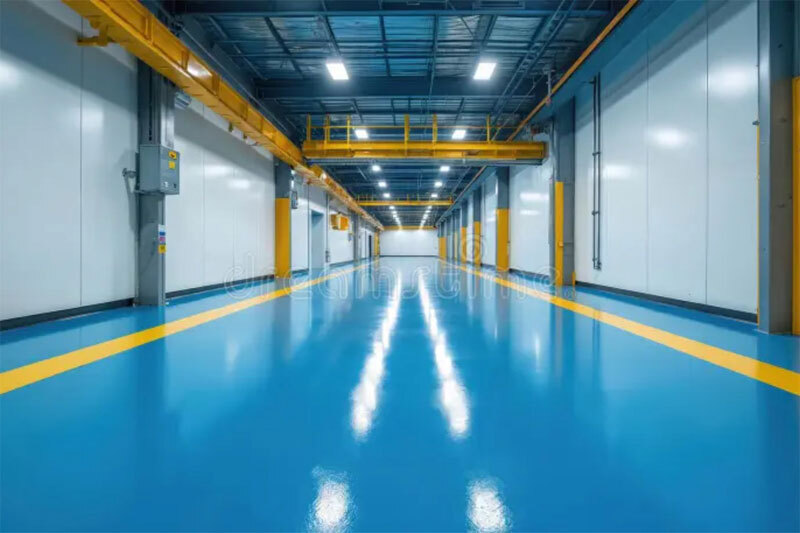
When running an industrial facility, the flooring beneath your feet is more than just a surface—it’s an essential component of efficiency, safety, and cost control. Unlike residential or commercial spaces, factories, warehouses, and distribution centers demand floors that can withstand relentless use, heavy equipment, and exposure to harsh substances. That’s why industrial epoxy flooring has become the solution of choice for business owners and facility managers around the world.
In this article, we’ll explore what industrial epoxy flooring is, its benefits, applications, costs, and why it outperforms traditional flooring options.
What Is Industrial Epoxy Flooring?
Epoxy flooring is a two-part resin system made from epoxy resin and a hardener. When mixed and applied to a prepared concrete surface, the two components chemically react, forming a rigid plastic-like material that bonds directly with the concrete.
Industrial-grade epoxy flooring is engineered to handle extreme conditions, including:
- Constant forklift and machinery traffic.
- Heavy loads and impacts.
- Spills of oils, fuels, and chemicals.
- Continuous foot traffic.
Unlike simple paints or sealers, epoxy integrates with the concrete itself, creating a seamless, long-lasting surface that’s as tough as it is attractive.
Benefits of Industrial Epoxy Flooring
Extreme Durability
Industrial environments put flooring through some of the toughest conditions imaginable. Epoxy coatings are designed to withstand 10,000+ pounds of pressure per square inch, making them resilient against constant forklift movement, pallet drops, and industrial equipment.
Chemical and Spill Resistance
Factories and warehouses often deal with harsh chemicals, from solvents to cleaning agents. Epoxy floors create a non-porous, chemical-resistant barrier, ensuring spills don’t penetrate the concrete or compromise structural integrity.
Enhanced Safety
Epoxy coatings can be customized with slip-resistant additives, textured finishes, and even color-coded safety lines. Bright, reflective finishes also improve lighting conditions, reducing workplace accidents and improving visibility.
Cost-Effective Investment
While installation requires upfront investment, epoxy coatings save money in the long run. Their long lifespan reduces repair and replacement costs, and their low maintenance needs mean fewer resources spent on upkeep.
Low Maintenance and Easy Cleaning
Because epoxy forms a seamless surface without grout lines or cracks, dust, dirt, and liquids are easy to clean. This makes it particularly valuable for food production facilities and warehouses that require frequent sanitation.
Applications of Industrial Epoxy Flooring
Industrial epoxy flooring is versatile and used across multiple industries.
Warehouses and Distribution Centers
- Handles forklifts, pallet jacks, and heavy rolling loads.
- Resistant to tire marks, scratches, and stains.
Manufacturing Plants
- Protects against abrasions from machinery.
- Withstands exposure to oils, coolants, and industrial solvents.
Food and Beverage Facilities
- Seamless and non-porous, reducing bacterial growth.
- Meets USDA and FDA standards for sanitation and safety.
Healthcare and Pharmaceutical Facilities
- Creates sterile, dust-free environments.
- Antimicrobial additives can be included for compliance.
Automotive Shops and Airplane Hangars
- Resistant to motor oil, gasoline, hydraulic fluids, and jet fuel.
- Withstands constant tire wear and heavy vehicle loads.
Types of Industrial Epoxy Flooring Systems
Standard Epoxy Coatings
A durable and cost-effective choice for general industrial use, providing protection against wear and stains.
Flake Epoxy Systems
Decorative and slip-resistant, these systems incorporate colored flakes that enhance both safety and aesthetics.
Metallic Epoxy Flooring
More common in showrooms or presentation areas, metallic epoxy offers a marbled, high-gloss effect with industrial-grade durability.
Polyaspartic and Hybrid Coatings
Often combined with epoxy, polyaspartic coatings cure faster and provide additional UV stability, making them suitable for large industrial facilities requiring quick turnaround.
Antimicrobial Epoxy
Specialized systems designed for food production, healthcare, and pharmaceutical environments where hygiene is critical.
Cost of Industrial Epoxy Flooring
The price of epoxy flooring depends on project size, preparation, and system type. On average, businesses can expect:
- $4–$12 per square foot for standard industrial epoxy.
- $8–$15 per square foot for specialized coatings (antimicrobial, polyaspartic, or metallic).
Key Cost Factors
- Surface Preparation: Grinding, shot-blasting, and repairing damaged concrete.
- Epoxy Type: Standard coatings vs. high-performance or chemical-resistant systems.
- Square Footage: Larger areas typically reduce cost per square foot.
- Additional Features: Anti-slip finishes, antimicrobial additives, or safety markings increase costs.
When compared to alternatives like tile, vinyl, or untreated concrete, epoxy delivers the best return on investment thanks to its longevity and reduced maintenance requirements.
The Installation Process
Professional installation is essential for ensuring epoxy flooring lives up to its industrial potential. Here’s the general process:
- Concrete Preparation – Shot blasting or diamond grinding opens the surface for adhesion. Cracks and chips are repaired.
- Moisture Testing – Ensures the concrete substrate is dry enough to support epoxy bonding.
- Primer Application – A primer coat helps epoxy adhere to the surface and prevents bubbling.
- Epoxy Base Layer – The resin is applied evenly to form a durable foundation.
- Optional Enhancements – Add flakes, metallic pigments, or safety lines for customization.
- Topcoat Sealing – A UV-resistant, chemical-resistant top layer seals the system.
- Curing – Floors are usable within 24–48 hours but reach full strength in 5–7 days.
Industrial Epoxy Flooring vs. Alternatives
- Polished Concrete: Attractive but less chemical-resistant and more prone to staining.
- Vinyl Tiles: Quick to install but not suitable for heavy loads or machinery.
- Rubber Mats: Provide cushioning but wear quickly under industrial use.
- Tile or Stone Flooring: Expensive to install and prone to cracking under impact.
Industrial epoxy flooring outperforms these options in strength, cost-effectiveness, and maintenance, making it the top choice for high-demand environments.
Maintenance and Longevity
With proper installation and care, epoxy floors can last:
- 10–20 years in warehouses and factories.
- 5–10 years in extreme heavy-duty or chemical-intensive environments.
Maintenance Tips:
- Sweep and mop regularly to remove grit.
- Use pH-neutral cleaners to avoid damaging the surface.
- Reapply protective topcoats every few years for maximum lifespan.
Why Hire Professional Installers for Industrial Epoxy Flooring
While DIY epoxy kits are common in residential garages, industrial epoxy flooring requires professional expertise.
- Advanced Surface Prep: Industrial-grade grinding and shot blasting ensure adhesion.
- High-Performance Materials: Contractors use stronger resins than consumer kits.
- Compliance and Safety: Professionals understand OSHA and industry-specific regulations.
- Warranty Protection: Many installers offer guarantees on materials and labor.
Industrial facilities can’t afford weak or unreliable flooring. Industrial epoxy flooring provides the strength, safety, and cost-effectiveness that warehouses, factories, and production plants demand. With benefits ranging from extreme durability to easy maintenance and compliance with safety standards, epoxy is the flooring solution built to keep up with today’s toughest environments.
Ready to upgrade your facility? Contact an industrial epoxy flooring specialist today to get a tailored estimate and discover how epoxy can transform your workspace.